
mashhoor#01
Laden Autumn here I stand,Worn of heart, and weak of hand.
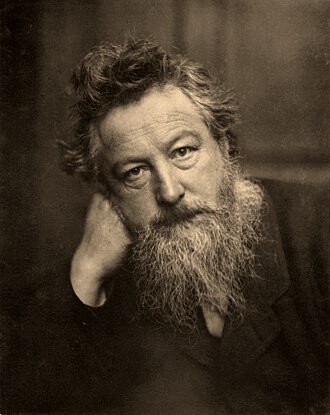
विलियम मॉरिस (1834–1896) विश्व साहित्य के एक अत्यंत प्रतिष्ठित एवं कालजयी कवि हैं, जिनकी रचनाएँ आज भी दुनिया भर में प्रेम और दर्शन के लिए पढ़ी जाती हैं।

‘Laden Autumn here I stand,Worn of heart, and weak of hand.’— विलियम मॉरिस
Laden Autumn here I stand,
‘Nought but rest seems good to me,Speak the word that sets me free.’— विलियम मॉरिस
Nought but rest seems good to me,

‘Through thick Arcadian woods a hunter went,Following the beasts upon a fresh spring day.’— विलियम मॉरिस
Through thick Arcadian woods a hunter went,
Laden Autumn here I stand,Worn of heart, and weak of hand.
Nought but rest seems good to me,Speak the word that sets me free.
Through thick Arcadian woods a hunter went,Following the beasts upon a fresh spring day.
But since his horn-tipped bow but seldom bent,Now at the noontide nought had happed to slay.

Within a vale he called his hounds away,Hearkening the echoes of his lone voice cling.
About the cliffs and through the beech-trees ring,But when they ended, still awhile he stood.
And but the sweet familiar thrush could hear,And all the day-long noises of the wood.
And o'er the dry leaves of the vanished year,His hounds' feet pattering as they drew anear.

And heavy breathing from their heads low hung,To see the mighty corner bow unstrung.
Then smiling did he turn to leave the place,But with his first step some new fleeting thought.
A shadow cast across his sun-burnt face,I think the golden net that April brought.
From some warm world his wavering soul had caught,For, sunk in vague sweet longing, did he go.

Betwixt the trees with doubtful steps and slow,Yet howsoever slow he went, at last.
The trees grew sparser, and the wood was done,Whereon one farewell backward look he cast.
Then, turning round to see what place was won,With shaded eyes looked underneath the sun.
And o'er green meads and new-turned furrows brown,Beheld the gleaming of King Schœneus' town.

So thitherward he turned, and on each side,The folk were busy on the teeming land.
And man and maid from the brown furrows cried,Or midst the newly blossomed vines did stand.
And as the rustic weapon pressed the hand,Thought of the nodding of the well-filled ear.
Or how the knife the heavy bunch should shear,Merry it was: about him sung the birds.

The spring flowers bloomed along the firm dry road,The sleek-skinned mothers of the sharp-horned herds.
Now for the barefoot milking-maidens lowed,While from the freshness of his blue abode.
Glad his death-bearing arrows to forget,The broad sun blazed, nor scattered plagues as yet.
Through such fair things unto the gates he came,And found them open, as though peace were there.

Wherethrough, unquestioned of his race or name,He entered, and along the streets 'gan fare.
Which at the first of folk were well-nigh bare,But pressing on, and going more hastily.
Men hurrying too he 'gan at last to see,Following the last of these he still pressed on.
Until an open space he came unto,Where wreaths of fame had oft been lost and won.

For feats of strength folks there were wont to do,And now our hunter looked for something new.
Because the whole wide space was bare, and stilled,The high seats were, with eager people filled.
There with the others to a seat he gat,Whence he beheld a broidered canopy.
'Neath which in fair array King Schœneus sat,Upon his throne with councillors thereby.

And underneath his well-wrought seat and high,He saw a golden image of the sun.
A silver image of the Fleet-foot One,A brazen altar stood beneath their feet.
Whereon a thin flame flicker'd in the wind,Nigh this a herald clad in raiment meet.
Made ready even now his horn to wind,By whom a huge man held a sword, entwin'd.
With yellow flowers; these stood a little space,From off the altar, nigh the starting place.
And there two runners did the sign abide,Foot set to foot,--a young man slim and fair.
Crisp-hair'd, well knit, with firm limbs often tried,In places where no man his strength may spare.
Dainty his thin coat was, and on his hair,A golden circlet of renown he wore.
And in his hand an olive garland bore,But on this day with whom shall he contend?.
A maid stood by him like Diana clad,When in the woods she lists her bow to bend.
Too fair for one to look on and be glad,Who scarcely yet has thirty summers had.
If he must still behold her from afar,Too fair to let the world live free from war.
She seem'd all earthly matters to forget,Of all tormenting lines her face was clear.
Her wide gray eyes upon the goal were set,Calm and unmov'd as though no soul were near.
But her foe trembled as a man in fear,Nor from her loveliness one moment turn'd.
His anxious face with fierce desire that burn'd,Now through the hush there broke the trumpet's clang.
Just as the setting sun made eventide,Then from light feet a spurt of dust there sprang.
And swiftly were they running side by side,But silent did the thronging folk abide.
Until the turning-post was reach'd at last,And round about it still abreast they passed.
But when the people saw how close they ran,When half-way to the starting-point they were.
A cry of joy broke forth, whereat the man,Headed the white-foot runner, and drew near.
Unto the very end of all his fear,And scarce his straining feet the ground could feel.
And bliss unhop'd for o'er his heart 'gan steal,But 'midst the loud victorious shouts he heard.
Her footsteps drawing nearer, and the sound,Of fluttering raiment, and thereat afeard.
His flush'd and eager face he turn'd around,And even then he felt her past him bound.
Fleet as the wind, but scarcely saw her there,Till on the goal she laid her fingers fair.
There stood she breathing like a little child,Amid some warlike clamour laid asleep.
For no victorious joy her red lips smil'd,Her cheek its wonted freshness did but keep.
No glance lit up her clear gray eyes and deep,Though some divine thought soften'd all her face.
As once more rang the trumpet through the place,But her late foe stopp'd short amidst his course.
One moment gaz'd upon her piteously,Then with a groan his lingering feet did force.
To leave the spot whence he her eyes could see,And, changed like one who knows his time must be.
But short and bitter, without any word,He knelt before the bearer of the sword.
Then high rose up the gleaming deadly blade,Bar'd of its flowers, and through the crowded place.
Was silence now, and midst of it the maid,Went by the poor wretch at a gentle pace.
And he to hers upturn'd his sad white face,Nor did his eyes behold another sight.
Ere on his soul there fell eternal light,So was the pageant ended, and all folk.
Talking of this and that familiar thing,In little groups from that sad concourse broke.
For now the shrill bats were upon the wing,And soon dark night would slay the evening.
And in dark gardens sang the nightingale,Her little-heeded, oft-repeated tale.
And with the last of all the hunter went,Who, wondering at the strange sight he had seen.
Prayed an old man to tell him what it meant,Both why the vanquished man so slain had been.
And if the maiden were an earthly queen,Or rather what much more she seemed to be.
No sharer in this world's mortality,"Stranger," said he, "I pray she soon may die.
Whose lovely youth has slain so many an one!,King Schœneus' daughter is she verily.
Who when her eyes first looked upon the sun,Was fain to end her life but new begun.
For he had vowed to leave but men alone,Sprung from his loins when he from earth was gone.
"Therefore he bade one leave her in the wood,And let wild things deal with her as they might.
But this being done, some cruel god thought good,To save her beauty in the world's despite.
Folk say that her, so delicate and white,As now she is, a rough root-grubbing bear.
Amidst her shapeless cubs at first did rear,"In course of time the woodfolk slew her nurse.
And to their rude abode the youngling brought,And reared her up to be a kingdom's curse.
Who grown a woman, of no kingdom thought,But armed and swift, 'mid beasts destruction wrought.
Nor spared two shaggy centaur kings to slay,To whom her body seemed an easy prey.
"So to this city, led by fate, she came,Whom known by signs, whereof I cannot tell.
King Schœneus for his child at last did claim,Nor otherwhere since that day doth she dwell.
Sending too many a noble soul to hell--,What! shine eyes glisten! what then, thinkest thou.
Her shining head unto the yoke to bow?,"Listen, my son, and love some other maid.
For she the saffron gown will never wear,And on no flower-strewn couch shall she be laid.
Nor shall her voice make glad a lover's ear,Yet if of Death thou hast not any fear.
Yea, rather, if thou lov'st her utterly,Thou still may'st woo her ere thou com'st to die.
"Like him that on this day thou sawest lie dead,For fearing as I deem the sea-born one.
The maid has vowed e'en such a man to wed,As in the course her swift feet can outrun.
But whoso fails herein, his days are done,He came the nighest that was slain to-day.
Although with him I deem she did but play,"Behold, such mercy Atalanta gives.
To those that long to win her loveliness,Be wise! be sure that many a maid there lives.
Gentler than she, of beauty little less,Whose swimming eyes thy loving words shall bless.
When in some garden, knee set close to knee,Thou sing'st the song that love may teach to thee.".
So to the hunter spake that ancient man,And left him for his own home presently.
विलियम मॉरिस (1834–1896) विश्व साहित्य के एक अत्यंत प्रतिष्ठित एवं कालजयी कवि हैं, जिनकी रचनाएँ आज भी दुनिया भर में प्रेम और दर्शन के लिए पढ़ी जाती हैं।
विलियम मॉरिस ने भाषा और उपमानों की सीमाओं को पार कर ऐसी संजीदा शैली विकसित की, जो सीधे पाठक के अंतर्मन से संवाद करती है।
Arts and Crafts Movement (1834–1896) के महान रचनाकार के रूप में सम्मानित, विलियम मॉरिस की कृतियाँ आज कई अंतरराष्ट्रीय भाषाओं में सराही और अनुवादित की जाती हैं।
प्रेम, विरह, मानवीय कमज़ोरी और जीवन के गूढ़ रहस्यों को विलियम मॉरिस ने अपनी शायरी में अमर सत्य की तरह संजोया है।
कॉलेज के युवाओं से लेकर दशकों पुरानी यादों में खोए बुज़ुर्गों तक, विलियम मॉरिस हर पीढ़ी को जोड़ते हैं। दिल टूटने पर उनके शेर कड़वाहट नहीं घोलते, बल्कि मानवीय भावना को एक नाज़ुक, पवित्र अनुभूति की तरह स्वीकार करते हैं। आज भी सोशल मीडिया, शास्त्रीय संगीत और मुशायरों में इनके शेर हर रोज़ लाखों दिलों की धड़कन बनते हैं।
पसंद का शेर चुनिए, मनपसंद टेम्पलेट लगाइए, फ़ॉन्ट और रंग सजाइए और एक क्लिक में सेव कर लीजिए।
“तेरी खामोशियों में भी एक कायनात बसती है...”
EmotionHub.in • Cosmic Poetryजिसके लिए लिखना है, उसे या कोई त्योहार चुनिए और तैयार संग्रह खोल लीजिए।
शेरों के पीछे की आवाज़ें पढ़िए, त्योहार की तैयारी कीजिए और स्टेटस के लिए छोटी पंक्ति उठाइए
विलियम मॉरिस के जीवन, प्रसिद्ध ग़ज़लों और साहित्यिक विरासत से जुड़े प्रामाणिक उत्तर।
कोई अन्य सवाल है? संपर्क करें
विलियम मॉरिस (1834–1896) Arts and Crafts Movement (1834–1896) के एक विश्व-प्रसिद्ध कवि थे, जिनकी रचनाएँ सार्वभौमिक मानवीय संवेदनाओं को उजागर करती हैं।
उनकी कविताओं में प्रेम, प्रकृति, मानवीय संघर्ष, मृत्यु और दार्शनिक चिंतन के मार्मिक पहलू गहराई से अभिव्यक्त हुए हैं।
उनकी रचनाएँ मानवीय संवेदनाओं, प्रेम, विरह और गहरे जीवन दर्शन को अत्यंत मार्मिक भाषा में प्रस्तुत करती हैं।
इनकी प्रमुख कृतियों में कालजयी शेर, ग़ज़लें और नज़्में शामिल हैं जो आज भी विश्वभर के पाठकों द्वारा पढ़ी जाती हैं।
उन्होंने अपनी भाषा शैली और नए उपमानों के माध्यम से आने वाली पीढ़ियों के रचनाकारों को गहराई से प्रेरित किया।
हाँ, Emotion Hub पर आप एक क्लिक में शेर कॉपी कर सकते हैं और सीधे WhatsApp पर शेयर कर सकते हैं।
हाँ, आप 300 DPI वॉलपेपर क्वालिटी में टेक्स्ट के साथ तैयार कार्ड डाउनलोड कर सकते हैं या डिज़ाइन स्टूडियो में कस्टमाइज़ कर सकते हैं।
विलियम मॉरिस की स्मृति में समर्पित स्मारक और ऐतिहासिक स्थल साहित्य प्रेमियों के लिए एक पवित्र धरोहर हैं।
कोई पंक्ति चुनिए, उसे अपना अंदाज़ दीजिए और भेज दीजिए। आपका पहला कार्ड बस कुछ टैप दूर है।