
mashhoor#01
WHEN he should laugh the wise man knows full well,For he knows what is truly laughable.
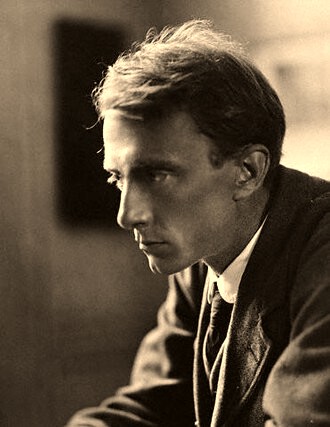
एडवर्ड थॉमस (1878–1917) English/Georgian साहित्य के एक अत्यंत प्रतिष्ठित एवं अमर कवि हैं।

‘WHEN he should laugh the wise man knows full well,For he knows what is truly laughable.’— एडवर्ड थॉमस
WHEN he should laugh the wise man knows full well,
‘But wiser is the man who laughs also,Or holds his laughter, when the foolish do.’— एडवर्ड थॉमस
But wiser is the man who laughs also,
‘BUT these things also are Spring's--,On banks by the roadside the grass.’— एडवर्ड थॉमस
BUT these things also are Spring's--,
WHEN he should laugh the wise man knows full well,For he knows what is truly laughable.
But wiser is the man who laughs also,Or holds his laughter, when the foolish do.
BUT these things also are Spring's--,On banks by the roadside the grass.
Long-dead that is greyer now,Than all the Winter it was.

The shell of a little snail bleached,In the grass; chip of flint, and mite.
Of chalk; and the small birds' dung,In splashes of purest white.
All the white things a man mistakes,For earliest violets.
Who seeks through Winter's ruins,Something to pay Winter's debts.

While the North blows, and starling flocks,By chattering on and on.
Keep their spirits up in the mist,And Spring's here, Winter's not gone.
WILL you come?,Will you come?.
Will you ride,So late.

At my side?,O, will you come?.
Will you come?,Will you come.
If the night,Has a moon.
Full and bright?,O, will you come?.

Would you come?,Would you come.
If the noon,Gave light.
Not the moon?,Beautiful, would you come?.
Would you have come?,Would you have come.

Without scorning,Had it been.
Still morning?,Beloved, would you have come?.
If you come,Haste and come.
Owls have cried,It grows dark.

To ride,Beloved, beautiful, come.
THE flowers left thick at nightfall in the wood,This Eastertide call into mind the men.
Now far from home, who, with their sweethearts, should,Have gathered them and will do never again.
THERE they stand, on their ends, the fifty faggots,That once were underwood of hazel and ash.

In Jenny Pinks's Copse. Now, by the hedge,Close packed, they make a thicket fancy alone.
Can creep through with the mouse and wren. Next,Spring.
A blackbird or a robin will nest there,Accustomed to them, thinking they will remain.
Whatever is for ever to a bird,This Spring it is too late; the swift has come.

'Twas a hot day for carrying them up,Better they will never warm me, though they must.
Light several Winters' fires. Before they are done,The war will have ended, many other things.
Have ended, maybe, that I can no more,Foresee or more control than robin and wren.
THE cherry trees bend over and are shedding,On the old road where all that passed are dead.
Their petals, strewing the grass as for a wedding,This early May morn when there is none to wed.
SOME eyes condemn the earth they gaze upon,Some wait patiently till they know far more.
Than earth can tell them: some laugh at the whole,As folly of another's making: one.
I knew that laughed because he saw, from core,To rind, not one thing worth the laugh his soul.
Had ready at waking: some eyes have begun,With laughing; some stand startled at the door.
Others, too, I have seen rest, question, roll,Dance, shoot. And many I have loved watching.
Some,I could not take my eyes from till they turned.
And loving died. I had not found my goal,But thinking of your eyes, dear, I become.
THE rain and wind, the rain and wind, raved endlessly,On me the Summer storm, and fever, and melancholy.
Wrought magic, so that if I feared the solitude,Far more I feared all company: too sharp, too rude.
Had been the wisest or the dearest human voice,What I desired I knew not, but whate'er my choice.
Vain it must be, I knew. Yet naught did my despair,But sweeten the strange sweetness, while through the.
wild air,All day long I heard a distant cuckoo calling.
And, soft as dulcimers, sounds of near water falling,And, softer, and remote as if in history.
Rumours of what had touched my friends, my foes,or me.
IT was upon a July evening,At a stile I stood, looking along a path.
Over the country by a second Spring,Drenched perfect green again. "The lattermath.
Will be a fine one." So the stranger said,A wandering man. Albeit I stood at rest.
Flushed with desire I was. The earth outspread,Like meadows of the future, I possessed.
And as an unaccomplished prophecy,The stranger's words, after the interval.
Of a score years, when those fields are by me,Never to be recrossed, now I recall.
This July eve, and question, wondering,What of the lattermath to this hoar Spring?.
TALL nettles cover up, as they have done,These many springs, the rusty harrow, the plough.
Long worn out, and the roller made of stone,Only the elm butt tops the nettles now.
This corner of the farmyard I like most,As well as any bloom upon a flower.
I like the dust on the nettles, never lost,Except to prove the sweetness of a shower.
IT stands alone,Up in a land of stone.
All worn like ancient stairs,A land of rocks and trees.
Nourished on wind and stone,And all within.
Long delicate has been,By arts and kindliness.
Coloured, sweetened, and warmed,For many years has been.
Safe resting there,Men hear in the travelling air.
But music, pictures see,In the same daily land.
Painted by the wild air,One maker's mind.
Made both, and the house is kind,To the land that gave it peace.
And the stone has taken the house,To its cold heart and is kind.
THE summer nests uncovered by autumn wind,Some torn, others dislodged, all dark.
Everyone sees them: low or high in tree,Or hedge, or single bush, they hang like a mark.
Since there's no need of eyes to see them with,I cannot help a little shame.
That I missed most, even at eye's level, till,The leaves blew off and made the seeing no game.
'Tis a light pang. I like to see the nests,Still in their places, now first known.
At home and by far roads. Boys knew them not,Whatever jays and squirrels may have done.
And most I like the winter nests deep-hid,That leaves and berries fell into.
Once a dormouse dined there on hazel-nuts,And grass and goose-grass seeds found soil and grew.
OUT of the wood of thoughts that grows by night,To be cut down by the sharp axe of light,--.
Out of the night, two cocks together crow,Cleaving the darkness with a silver blow.
And bright before my eyes twin trumpeters stand,Heralds of splendour, one at either hand.
Each facing each as in a coat of arms,The milkers lace their boots up at the farms.
DARK is the forest and deep, and overhead,Hang stars like seeds of light.
In vain, though not since they were sown was bred,Anything more bright.
And evermore mighty multitudes ride,About, nor enter in.
Of the other multitudes that dwell inside,Never yet was one seen.
The forest foxglove is purple, the marguerite,Outside is gold and white.
Nor can those that pluck either blossom greet,The others, day or night.
I BUILT myself a house of glass,It took me years to make it.
And I was proud. But now, alas,Would God someone would break it.
But it looks too magnificent,No neighbour casts a stone.
From where he dwells, in tenement,Or palace of glass, alone.
MEN heard this roar of parleying starlings, saw,A thousand years ago even as now.
Black rooks with white gulls following the plough,So that the first are last until a caw.
Commands that last are first again,--a law,Which was of old when one, like me, dreamed.
how,A thousand years might dust lie on his brow.
Yet thus would birds do between hedge and shaw,Time swims before me, making as a day.
A thousand years, while the broad ploughland,oak.
Roars mill-like and men strike and bear the,stroke.
एडवर्ड थॉमस (1878–1917) English/Georgian साहित्य के एक अत्यंत प्रतिष्ठित एवं अमर कवि हैं।
एडवर्ड थॉमस ने भाषा और उपमानों की सीमाओं को पार कर ऐसी संजीदा शैली विकसित की, जो सीधे पाठक के अंतर्मन से संवाद करती है।
Georgian & War Era (1878–1917) के महान रचनाकार के रूप में सम्मानित, एडवर्ड थॉमस की कृतियाँ आज कई अंतरराष्ट्रीय भाषाओं में सराही और अनुवादित की जाती हैं।
प्रेम, विरह, मानवीय कमज़ोरी और जीवन के गूढ़ रहस्यों को एडवर्ड थॉमस ने अपनी शायरी में अमर सत्य की तरह संजोया है।
कॉलेज के युवाओं से लेकर दशकों पुरानी यादों में खोए बुज़ुर्गों तक, एडवर्ड थॉमस हर पीढ़ी को जोड़ते हैं। दिल टूटने पर उनके शेर कड़वाहट नहीं घोलते, बल्कि मानवीय भावना को एक नाज़ुक, पवित्र अनुभूति की तरह स्वीकार करते हैं। आज भी सोशल मीडिया, शास्त्रीय संगीत और मुशायरों में इनके शेर हर रोज़ लाखों दिलों की धड़कन बनते हैं।
पसंद का शेर चुनिए, मनपसंद टेम्पलेट लगाइए, फ़ॉन्ट और रंग सजाइए और एक क्लिक में सेव कर लीजिए।
“तेरी खामोशियों में भी एक कायनात बसती है...”
EmotionHub.in • Cosmic Poetryजिसके लिए लिखना है, उसे या कोई त्योहार चुनिए और तैयार संग्रह खोल लीजिए।
शेरों के पीछे की आवाज़ें पढ़िए, त्योहार की तैयारी कीजिए और स्टेटस के लिए छोटी पंक्ति उठाइए
एडवर्ड थॉमस के जीवन, प्रसिद्ध ग़ज़लों और साहित्यिक विरासत से जुड़े प्रामाणिक उत्तर।
कोई अन्य सवाल है? संपर्क करें
एडवर्ड थॉमस English/Georgian साहित्य के कालजयी कवि थे।
एडवर्ड थॉमस का ऐतिहासिक जीवनकाल 1878 से 1917 (Georgian & War Era (1878–1917)) तक रहा।
उनकी रचनाएँ मानवीय संवेदनाओं, प्रेम, विरह और गहरे जीवन दर्शन को अत्यंत मार्मिक भाषा में प्रस्तुत करती हैं।
इनकी प्रमुख कृतियों में कालजयी शेर, ग़ज़लें और नज़्में शामिल हैं जो आज भी विश्वभर के पाठकों द्वारा पढ़ी जाती हैं।
उन्होंने अपनी भाषा शैली और नए उपमानों के माध्यम से आने वाली पीढ़ियों के रचनाकारों को गहराई से प्रेरित किया।
हाँ, Emotion Hub पर आप एक क्लिक में शेर कॉपी कर सकते हैं और सीधे WhatsApp पर शेयर कर सकते हैं।
हाँ, आप 300 DPI वॉलपेपर क्वालिटी में टेक्स्ट के साथ तैयार कार्ड डाउनलोड कर सकते हैं या डिज़ाइन स्टूडियो में कस्टमाइज़ कर सकते हैं।
एडवर्ड थॉमस की स्मृति में समर्पित स्मारक और ऐतिहासिक स्थल साहित्य प्रेमियों के लिए एक पवित्र धरोहर हैं।
कोई पंक्ति चुनिए, उसे अपना अंदाज़ दीजिए और भेज दीजिए। आपका पहला कार्ड बस कुछ टैप दूर है।