
mashhoor#01
FROM off a hill whose concave womb reworded,A plaintful story from a sistering vale.
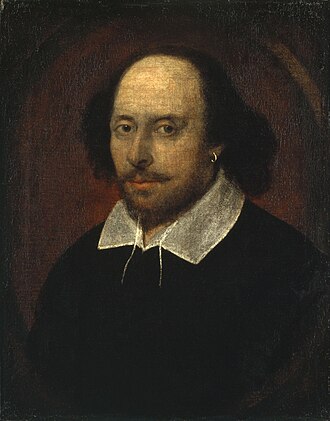
William Shakespeare was an English playwright, poet, and actor, widely regarded as the greatest writer in the English language and the world's pre-eminent dramatist.

‘FROM off a hill whose concave womb reworded,A plaintful story from a sistering vale.’— William Shakespeare
FROM off a hill whose concave womb reworded,
‘My spirits to attend this double voice accorded,And down I laid to list the sad-tuned tale.’— William Shakespeare
My spirits to attend this double voice accorded,

‘Ere long espied a fickle maid full pale,Tearing of papers, breaking rings a-twain.’— William Shakespeare
Ere long espied a fickle maid full pale,
FROM off a hill whose concave womb reworded,A plaintful story from a sistering vale.
My spirits to attend this double voice accorded,And down I laid to list the sad-tuned tale.
Ere long espied a fickle maid full pale,Tearing of papers, breaking rings a-twain.
Storming her world with sorrow's wind and rain,Upon her head a platted hive of straw.

Which fortified her visage from the sun,Whereon the thought might think sometime it saw.
The carcass of beauty spent and done,Time had not scythed all that youth begun.
Nor youth all quit; but, spite of heaven's fell rage,Some beauty peep'd through lattice of sear'd age.
Oft did she heave her napkin to her eyne,Which on it had conceited characters.

Laundering the silken figures in the brine,That season'd woe had pelleted in tears.
And often reading what contents it bears,As often shrieking undistinguish'd woe.
In clamours of all size, both high and low,Sometimes her levell'd eyes their carriage ride.
As they did battery to the spheres intend,Sometime diverted their poor balls are tied.

To the orbed earth; sometimes they do extend,Their view right on; anon their gazes lend.
To every place at once, and, nowhere fix'd,The mind and sight distractedly commix'd.
Her hair, nor loose nor tied in formal plat,Proclaim'd in her a careless hand of pride.
For some, untuck'd, descended her sheaved hat,Hanging her pale and pined cheek beside.

Some in her threaden fillet still did bide,And true to bondage would not break from thence.
Though slackly braided in loose negligence,A thousand favours from a maund she drew.
Of amber, crystal, and of beaded jet,Which one by one she in a river threw.
Upon whose weeping margent she was set,Like usury, applying wet to wet.

Or monarch's hands that let not bounty fall,Where want cries some, but where excess begs all.
Of folded schedules had she many a one,Which she perused, sigh'd, tore, and gave the flood.
Crack'd many a ring of posied gold and bone,Bidding them find their sepulchres in mud.
Found yet moe letters sadly penn'd in blood,With sleided silk feat and affectedly.

Enswathed, and seal'd to curious secrecy,These often bathed she in her fluxive eyes.
And often kiss'd, and often 'gan to tear,Cried 'O false blood, thou register of lies.
What unapproved witness dost thou bear!,Ink would have seem'd more black and damned here!'.
This said, in top of rage the lines she rents,Big discontent so breaking their contents.

A reverend man that grazed his cattle nigh--,Sometime a blusterer, that the ruffle knew.
Of court, of city, and had let go by,The swiftest hours, observed as they flew--.
Towards this afflicted fancy fastly drew,And, privileged by age, desires to know.
In brief the grounds and motives of her woe,So slides he down upon his grained bat.

And comely-distant sits he by her side,When he again desires her, being sat.
Her grievance with his hearing to divide,If that from him there may be aught applied.
Which may her suffering ecstasy assuage,'Tis promised in the charity of age.
'Father,' she says, 'though in me you behold,The injury of many a blasting hour.
Let it not tell your judgment I am old,Not age, but sorrow, over me hath power.
I might as yet have been a spreading flower,Fresh to myself, If I had self-applied.
Love to myself and to no love beside,'But, woe is me! too early I attended.
A youthful suit--it was to gain my grace--,Of one by nature's outwards so commended.
That maidens' eyes stuck over all his face,Love lack'd a dwelling, and made him her place.
And when in his fair parts she did abide,She was new lodged and newly deified.
'His browny locks did hang in crooked curls,And every light occasion of the wind.
Upon his lips their silken parcels hurls,What's sweet to do, to do will aptly find.
Each eye that saw him did enchant the mind,For on his visage was in little drawn.
What largeness thinks in Paradise was sawn,'Small show of man was yet upon his chin.
His phoenix down began but to appear,Like unshorn velvet on that termless skin.
Whose bare out-bragg'd the web it seem'd to wear,Yet show'd his visage by that cost more dear.
And nice affections wavering stood in doubt,If best were as it was, or best without.
'His qualities were beauteous as his form,For maiden-tongued he was, and thereof free.
Yet, if men moved him, was he such a storm,As oft 'twixt May and April is to see.
When winds breathe sweet, untidy though they be,His rudeness so with his authorized youth.
Did livery falseness in a pride of truth,'Well could he ride, and often men would say.
'That horse his mettle from his rider takes,Proud of subjection, noble by the sway.
What rounds, what bounds, what course, what stop,he makes!'.
And controversy hence a question takes,Whether the horse by him became his deed.
Or he his manage by the well-doing steed,'But quickly on this side the verdict went.
His real habitude gave life and grace,To appertainings and to ornament.
Accomplish'd in himself, not in his case,All aids, themselves made fairer by their place.
Came for additions; yet their purposed trim,Pieced not his grace, but were all graced by him.
'So on the tip of his subduing tongue,All kinds of arguments and question deep.
All replication prompt, and reason strong,For his advantage still did wake and sleep.
To make the weeper laugh, the laugher weep,He had the dialect and different skill.
Catching all passions in his craft of will,'That he did in the general bosom reign.
Of young, of old; and sexes both enchanted,To dwell with him in thoughts, or to remain.
In personal duty, following where he haunted,Consents bewitch'd, ere he desire, have granted.
And dialogued for him what he would say,Ask'd their own wills, and made their wills obey.
'Many there were that did his picture get,To serve their eyes, and in it put their mind.
Like fools that in th' imagination set,The goodly objects which abroad they find.
Of lands and mansions, theirs in thought assign'd,And labouring in moe pleasures to bestow them.
Than the true gouty landlord which doth owe them,'So many have, that never touch'd his hand.
Sweetly supposed them mistress of his heart,My woeful self, that did in freedom stand.
And was my own fee-simple, not in part,What with his art in youth, and youth in art.
Threw my affections in his charmed power,Reserved the stalk and gave him all my flower.
'Yet did I not, as some my equals did,Demand of him, nor being desired yielded.
Finding myself in honour so forbid,With safest distance I mine honour shielded.
Experience for me many bulwarks builded,Of proofs new-bleeding, which remain'd the foil.
Of this false jewel, and his amorous spoil,'But, ah, who ever shunn'd by precedent.
The destined ill she must herself assay?,Or forced examples, 'gainst her own content.
To put the by-past perils in her way?,Counsel may stop awhile what will not stay.
For when we rage, advice is often seen,By blunting us to make our wits more keen.
'Nor gives it satisfaction to our blood,That we must curb it upon others' proof.
To be forbod the sweets that seem so good,For fear of harms that preach in our behoof.
O appetite, from judgment stand aloof!,The one a palate hath that needs will taste.
Though Reason weep, and cry, 'It is thy last.','For further I could say 'This man's untrue,'.
And knew the patterns of his foul beguiling,Heard where his plants in others' orchards grew.
Saw how deceits were gilded in his smiling,Knew vows were ever brokers to defiling.
Thought characters and words merely but art,And bastards of his foul adulterate heart.
'And long upon these terms I held my city,Till thus he gan besiege me: 'Gentle maid.
Have of my suffering youth some feeling pity,And be not of my holy vows afraid.
That's to ye sworn to none was ever said,For feasts of love I have been call'd unto.
Till now did ne'er invite, nor never woo,''All my offences that abroad you see.
Are errors of the blood, none of the mind,Love made them not: with acture they may be.
Where neither party is nor true nor kind,They sought their shame that so their shame did find.
And so much less of shame in me remains,By how much of me their reproach contains.
''Among the many that mine eyes have seen,Not one whose flame my heart so much as warm'd.
Or my affection put to the smallest teen,Or any of my leisures ever charm'd.
Harm have I done to them, but ne'er was harm'd,Kept hearts in liveries, but mine own was free.
And reign'd, commanding in his monarchy,''Look here, what tributes wounded fancies sent me.
Of paled pearls and rubies red as blood,Figuring that they their passions likewise lent me.
Of grief and blushes, aptly understood,In bloodless white and the encrimson'd mood.
William Shakespeare was an English playwright, poet, and actor, widely regarded as the greatest writer in the English language and the world's pre-eminent dramatist.
William Shakespeare pioneered unique metaphors and an intimate conversational style, permanently redefining South Asian lyrical expression.
Celebrated across the Elizabethan & Jacobean Era, their verses have transcended borders, honored globally in multiple international translations and scholarly anthologies.
Weaving existential inquiry, intimate vulnerability, and philosophical depth, William Shakespeare captured the bittersweet beauty of human existence.
From student dormitories to seasoned scholars, William Shakespeare effortlessly bridges generational divides. Their couplets on love, heartbreak, and resilience don't wallow in bitterness; rather, they gently embrace emotion as a precious, soulful companion. On digital platforms and in musical concerts, their words continue to touch millions daily.
Select your favourite shayari or quote, choose an ethereal cosmic gradient, adjust the font to Noto Serif Devanagari, and export immediately.
“तेरी खामोशियों में भी एक कायनात बसती है...”
EmotionHub.in • Cosmic PoetryPick who you are writing to, or the festival, and open a ready collection.
Read the voices behind the verses, plan ahead for festivals and grab a quick status line
Authentic answers about William Shakespeare's life, iconic ghazals, and timeless literary legacy.
Still have a question? Contact us
William Shakespeare (1564–1616) was England's national poet, renowned for 39 plays and 154 sonnets.
Sonnet 18 ("Shall I compare thee to a summer's day?") is universally celebrated.
Shakespeare wrote 154 sonnets published in the 1609 Quarto edition.
Themes include the passage of time, enduring love, physical beauty, mortality, and artistic immortality.
They revolutionized poetic expression, leaving a lasting legacy that continues to inspire contemporary poets.
Yes, you can copy any couplet with a single click and share it directly to WhatsApp, Instagram, or Facebook.
Yes! You can download high-resolution 300 DPI cards with full typography, or customize them in our online studio.
Memorials and historic landmarks commemorating William Shakespeare stand as cherished cultural heritage sites for poetry enthusiasts.
Pick a line, add your style and send it off. Your first card is a few taps away.