
mashhoor#01
I am weary of lying within the chase,When the knights are meeting in market-place.
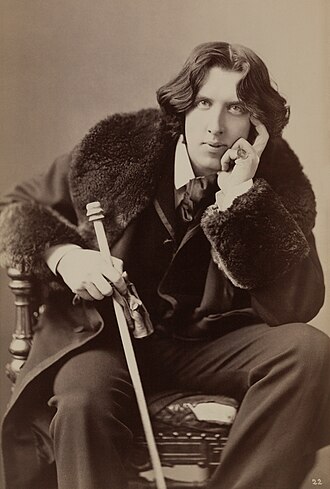
Oscar Wilde was an Irish poet and playwright. After writing in different forms throughout the 1880s, he became one of the most popular playwrights in London in the early 1890s.

‘I am weary of lying within the chase,When the knights are meeting in market-place.’— Oscar Wilde
I am weary of lying within the chase,

‘Nay, go not thou to the red-roofed town,Lest the hoofs of the war-horse tread thee down.’— Oscar Wilde
Nay, go not thou to the red-roofed town,

‘But I would not go where the Squires ride,I would only walk by my Lady's side.’— Oscar Wilde
But I would not go where the Squires ride,
I am weary of lying within the chase,When the knights are meeting in market-place.
Nay, go not thou to the red-roofed town,Lest the hoofs of the war-horse tread thee down.
But I would not go where the Squires ride,I would only walk by my Lady's side.
Alack! and alack! thou art overbold,A Forester's son may not eat off gold.

Will she love me the less that my Father is seen,Each Martinmas day in a doublet green?.
Perchance she is sewing at tapestrie,Spindle and loom are not meet for thee.
Ah, if she is working the arras bright,I might ravel the threads by the fire-light.
Perchance she is hunting of the deer,How could you follow o'er hill and mere?.

Ah, if she is riding with the court,I might run beside her and wind the morte.
Perchance she is kneeling in St. Denys,(On her soul may our Lady have gramercy!).
Ah, if she is praying in lone chapelle,I might swing the censer and ring the bell.
Come in, my son, for you look sae pale,The father shall fill thee a stoup of ale.

But who are these knights in bright array?,Is it a pageant the rich folks play?.
'T is the King of England from over sea,Who has come unto visit our fair countrie.
But why does the curfew toll sae low?,And why do the mourners walk a-row?.
O 't is Hugh of Amiens my sister's son,Who is lying stark, for his day is done.

Nay, nay, for I see white lilies clear,It is no strong man who lies on the bier.
O 't is old Dame Jeannette that kept the hall,I knew she would die at the autumn fall.
Dame Jeannette had not that gold-brown hair,Old Jeannette was not a maiden fair.
O 't is none of our kith and none of our kin,(Her soul may our Lady assoil from sin!).

But I hear the boy's voice chaunting sweet,'Elle est morte, la Marguerite.'.
Come in, my son, and lie on the bed,And let the dead folk bury their dead.
O mother, you know I loved her true,O mother, hath one grave room for two?.
(In memoriam,C. T. W.

Sometime trooper of the Royal Horse Guards,obiit H.M. prison, Reading, Berkshire.
He did not wear his scarlet coat,For blood and wine are red.
And blood and wine were on his hands,When they found him with the dead.
The poor dead woman whom he loved,And murdered in her bed.

He walked amongst the Trial Men,In a suit of shabby grey.
A cricket cap was on his head,And his step seemed light and gay.
But I never saw a man who looked,So wistfully at the day.
I never saw a man who looked,With such a wistful eye.

Upon that little tent of blue,Which prisoners call the sky.
And at every drifting cloud that went,With sails of silver by.
I walked, with other souls in pain,Within another ring.
And was wondering if the man had done,A great or little thing.
When a voice behind me whispered low,'THAT FELLOW'S GOT TO SWING.'.
Dear Christ! the very prison walls,Suddenly seemed to reel.
And the sky above my head became,Like a casque of scorching steel.
And, though I was a soul in pain,My pain I could not feel.
I only knew what hunted thought,Quickened his step, and why.
He looked upon the garish day,With such a wistful eye.
The man had killed the thing he loved,And so he had to die.
Yet each man kills the thing he loves,By each let this be heard.
Some do it with a bitter look,Some with a flattering word.
The coward does it with a kiss,The brave man with a sword!.
Some kill their love when they are young,And some when they are old.
Some strangle with the hands of Lust,Some with the hands of Gold.
The kindest use a knife, because,The dead so soon grow cold.
Some love too little, some too long,Some sell, and others buy.
Some do the deed with many tears,And some without a sigh.
For each man kills the thing he loves,Yet each man does not die.
He does not die a death of shame,On a day of dark disgrace.
Nor have a noose about his neck,Nor a cloth upon his face.
Nor drop feet foremost through the floor,Into an empty space.
He does not sit with silent men,Who watch him night and day.
Who watch him when he tries to weep,And when he tries to pray.
Who watch him lest himself should rob,The prison of its prey.
He does not wake at dawn to see,Dread figures throng his room.
The shivering Chaplain robed in white,The Sheriff stern with gloom.
And the Governor all in shiny black,With the yellow face of Doom.
He does not rise in piteous haste,To put on convict-clothes.
While some coarse-mouthed Doctor gloats,and notes.
Each new and nerve-twitched pose,Fingering a watch whose little ticks.
Are like horrible hammer-blows,He does not know that sickening thirst.
That sands one's throat, before,The hangman with his gardener's gloves.
Slips through the padded door,And binds one with three leathern thongs.
That the throat may thirst no more,He does not bend his head to hear.
The Burial Office read,Nor, while the terror of his soul.
Tells him he is not dead,Cross his own coffin, as he moves.
Into the hideous shed,He does not stare upon the air.
Through a little roof of glass,He does not pray with lips of clay.
For his agony to pass,Nor feel upon his shuddering cheek.
The kiss of Caiaphas,II.
Six weeks our guardsman walked the yard,In the suit of shabby grey.
His cricket cap was on his head,And his step seemed light and gay.
And at every wandering cloud that trailed,Its ravelled fleeces by.
He did not wring his hands, as do,Those witless men who dare.
To try to rear the changeling Hope,In the cave of black Despair.
He only looked upon the sun,And drank the morning air.
He did not wring his hands nor weep,Nor did he peek or pine.
But he drank the air as though it held,Some healthful anodyne.
With open mouth he drank the sun,As though it had been wine!.
And I and all the souls in pain,Who tramped the other ring.
Forgot if we ourselves had done,A great or little thing.
And watched with gaze of dull amaze,The man who had to swing.
And strange it was to see him pass,With a step so light and gay.
And strange it was to see him look,So wistfully at the day.
And strange it was to think that he,Had such a debt to pay.
For oak and elm have pleasant leaves,That in the springtime shoot.
But grim to see is the gallows-tree,With its adder-bitten root.
And, green or dry, a man must die,Before it bears its fruit!.
The loftiest place is that seat of grace,For which all worldlings try.
But who would stand in hempen band,Upon a scaffold high.
And through a murderer's collar take,His last look at the sky?.
It is sweet to dance to violins,When Love and Life are fair.
To dance to flutes, to dance to lutes,Is delicate and rare.
But it is not sweet with nimble feet,To dance upon the air!.
So with curious eyes and sick surmise,We watched him day by day.
And wondered if each one of us,Would end the self-same way.
For none can tell to what red Hell,His sightless soul may stray.
Oscar Wilde was an Irish poet and playwright. After writing in different forms throughout the 1880s, he became one of the most popular playwrights in London in the early 1890s.
Oscar Wilde pioneered unique metaphors and an intimate conversational style, permanently redefining South Asian lyrical expression.
Celebrated across the Victorian Aesthetic Movement, their verses have transcended borders, honored globally in multiple international translations and scholarly anthologies.
Weaving existential inquiry, intimate vulnerability, and philosophical depth, Oscar Wilde captured the bittersweet beauty of human existence.
From student dormitories to seasoned scholars, Oscar Wilde effortlessly bridges generational divides. Their couplets on love, heartbreak, and resilience don't wallow in bitterness; rather, they gently embrace emotion as a precious, soulful companion. On digital platforms and in musical concerts, their words continue to touch millions daily.
Select your favourite shayari or quote, choose an ethereal cosmic gradient, adjust the font to Noto Serif Devanagari, and export immediately.
“तेरी खामोशियों में भी एक कायनात बसती है...”
EmotionHub.in • Cosmic PoetryPick who you are writing to, or the festival, and open a ready collection.
Read the voices behind the verses, plan ahead for festivals and grab a quick status line
Authentic answers about Oscar Wilde's life, iconic ghazals, and timeless literary legacy.
Still have a question? Contact us
The Ballad of Reading Gaol (1898) is his most celebrated narrative poem.
Oscar Wilde lived through 1854 to 1900 (Victorian Aesthetic Movement).
Their poetry explores the full spectrum of human emotions—love, existential yearning, resilience, and philosophical introspection.
Their masterworks include timeless couplets and verses celebrated globally across literary traditions.
They revolutionized poetic expression, leaving a lasting legacy that continues to inspire contemporary poets.
Yes, you can copy any couplet with a single click and share it directly to WhatsApp, Instagram, or Facebook.
Yes! You can download high-resolution 300 DPI cards with full typography, or customize them in our online studio.
Memorials and historic landmarks commemorating Oscar Wilde stand as cherished cultural heritage sites for poetry enthusiasts.
Pick a line, add your style and send it off. Your first card is a few taps away.