
mashhoor#01
'Not by the justice that my father spurn'd,Not for the thousands whom my father slew.
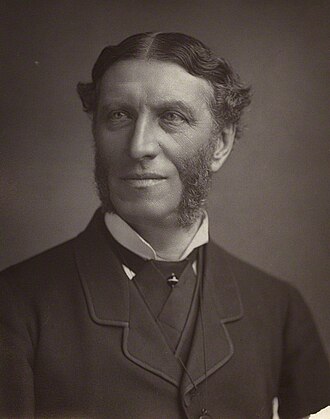
Matthew Arnold was an English poet and cultural critic. He was the son of Thomas Arnold, the headmaster of Rugby School, and brother of both Tom Arnold, literary professor, and William Delafield Arnold, novelist and colonial administrator. He has been characterised as a sage writ

‘'Not by the justice that my father spurn'd,Not for the thousands whom my father slew.’— Matthew Arnold
'Not by the justice that my father spurn'd,
‘Altars unfed and temples overturn'd,Cold hearts and thankless tongues, where thanks are due.’— Matthew Arnold
Altars unfed and temples overturn'd,
‘Fell this dread voice from lips that cannot lie,Stern sentence of the Powers of Destiny.’— Matthew Arnold
Fell this dread voice from lips that cannot lie,
'Not by the justice that my father spurn'd,Not for the thousands whom my father slew.
Altars unfed and temples overturn'd,Cold hearts and thankless tongues, where thanks are due.
Fell this dread voice from lips that cannot lie,Stern sentence of the Powers of Destiny.
'I will unfold my sentence and my crime,My crime--that, rapt in reverential awe.

I sate obedient, in the fiery prime,Of youth, self-govern'd, at the feet of Law.
Ennobling this dull pomp, the life of kings,By contemplation of diviner things.
'My father loved injustice, and lived long,Crown'd with grey hairs he died, and full of sway.
I loved the good he scorn'd, and hated wrong--,The Gods declare my recompense to-day.

I look'd for life more lasting, rule more high,And when six years are measured, lo, I die!.
'Yet surely, O my people, did I deem,Man's justice from the all-just Gods was given.
A light that from some upper fount did beam,Some better archetype, whose seat was heaven.
A light that, shining from the blest abodes,Did shadow somewhat of the life of Gods.

'Mere phantoms of man's self-tormenting heart,Which on the sweets that woo it dares not feed!.
Vain dreams, which quench our pleasures, then depart,When the duped soul, self-master'd, claims its meed.
When, on the strenuous just man, Heaven bestows,Crown of his struggling life, an unjust close!.
'Seems it so light a thing, then, austere Powers,To spurn man's common lure, life's pleasant things?.

Seems there no joy in dances crown'd with flowers,Love, free to range, and regal banquetings?.
Bend ye on these, indeed, an unmoved eye,Not Gods but ghosts, in frozen apathy?.
'Or is it that some Force, too wise, too strong,Even for yourselves to conquer or beguile.
Sweeps earth, and heaven, and men, and Gods along,Like the broad volume of the insurgent Nile?.

And the great powers we serve, themselves may be,Slaves of a tyrannous necessity?.
'Or in mid-heaven, perhaps, your golden cars,Where earthly voice climbs never, wing their flight.
And in wild hunt, through mazy tracts of stars,Sweep in the sounding stillness of the night?.
Or in deaf ease, on thrones of dazzling sheen,Drinking deep draughts of joy, ye dwell serene?.

'Oh, wherefore cheat our youth, if thus it be,Of one short joy, one lust, one pleasant dream?.
Stringing vain words of powers we cannot see,Blind divinations of a will supreme.
Lost labour! when the circumambient gloom,But hides, if Gods, Gods careless of our doom?.
'The rest I give to joy. Even while I speak,My sand runs short; and--as yon star-shot ray.

Hemm'd by two banks of cloud, peers pale and weak,Now, as the barrier closes, dies away--.
Even so do past and future intertwine,Blotting this six years' space, which yet is mine.
'Six years--six little years--six drops of time!,Yet suns shall rise, and many moons shall wane.
And old men die, and young men pass their prime,And languid pleasure fade and flower again.

And the dull Gods behold, ere these are flown,Revels more deep, joy keener than their own.
'Into the silence of the groves and woods,I will go forth; though something would I say--.
Something--yet what, I know not; for the Gods,The doom they pass revoke not, nor delay.
And prayers, and gifts, and tears, are fruitless all,And the night waxes, and the shadows fall.
'Ye men of Egypt, ye have heard your king!,I go, and I return not. But the will.
Of the great Gods is plain; and ye must bring,Ill deeds, ill passions, zealous to fulfil.
Their pleasure, to their feet; and reap their praise,The praise of Gods, rich boon! and length of days.'.
--So spake he, half in anger, half in scorn,And one loud cry of grief and of amaze.
Broke from his sorrowing people; so he spake,And turning, left them there; and with brief pause.
Girt with a throng of revellers, bent his way,To the cool region of the groves he loved.
There by the river-banks he wander'd on,From palm-grove on to palm-grove, happy trees.
Their smooth tops shining sunward, and beneath,Burying their unsunn'd stems in grass and flowers.
Where in one dream the feverish time of youth,Might fade in slumber, and the feet of joy.
Might wander all day long and never tire,Here came the king, holding high feast, at morn.
Rose-crown'd; and ever, when the sun went down,A hundred lamps beam'd in the tranquil gloom.
From tree to tree all through the twinkling grove,Revealing all the tumult of the feast--.
Flush'd guests, and golden goblets foam'd with wine,While the deep-burnish'd foliage overhead.
Splinter'd the silver arrows of the moon,It may be that sometimes his wondering soul.
From the loud joyful laughter of his lips,Might shrink half startled, like a guilty man.
Who wrestles with his dream; as some pale shape,Gliding half hidden through the dusky stems.
Would thrust a hand before the lifted bowl,Whispering: A little space, and thou art mine!.
It may be on that joyless feast his eye,Dwelt with mere outward seeming; he, within.
Took measure of his soul, and knew its strength,And by that silent knowledge, day by day.
Was calm'd, ennobled, comforted, sustain'd,It may be; but not less his brow was smooth.
And his clear laugh fled ringing through the gloom,And his mirth quail'd not at the mild reproof.
Sigh'd out by winter's sad tranquillity,Nor, pall'd with its own fulness, ebb'd and died.
In the rich languor of long summer-days,Nor wither'd when the palm-tree plumes, that roof'd.
With their mild dark his grassy banquet-hall,Bent to the cold winds of the showerless spring.
No, nor grew dark when autumn brought the clouds,So six long years he revell'd, night and day.
And when the mirth wax'd loudest, with dull sound,Sometimes from the grove's centre echoes came.
To tell his wondering people of their king,In the still night, across the steaming flats.
Light flows our war of mocking words, and yet,Behold, with tears mine eyes are wet!.
I feel a nameless sadness o'er me roll,Yes, yes, we know that we can jest.
We know, we know that we can smile!,But there's a something in this breast.
To which thy light words bring no rest,And thy gay smiles no anodyne.
Give me thy hand, and hush awhile,And turn those limpid eyes on mine.
And let me read there, love! thy inmost soul,Alas! is even love too weak.
To unlock the heart, and let it speak?,Are even lovers powerless to reveal.
To one another what indeed they feel?,I knew the mass of men conceal'd.
Their thoughts, for fear that if reveal'd,They would by other men be met.
With blank indifference, or with blame reproved,I knew they lived and moved.
Trick'd in disguises, alien to the rest,Of men, and alien to themselves--and yet.
The same heart beats in every human breast!,But we, my love!--doth a like spell benumb.
Our hearts, our voices?--must we too be dumb?,Ah! well for us, if even we.
Even for a moment, can get free,Our heart, and have our lips unchain'd.
For that which seals them hath been deep-ordain'd!,Fate, which foresaw.
How frivolous a baby man would be--,By what distractions he would be possess'd.
How he would pour himself in every strife,And well-nigh change his own identity--.
That it might keep from his capricious play,His genuine self, and force him to obey.
Even in his own despite his being's law,Bade through the deep recesses of our breast.
The unregarded river of our life,Pursue with indiscernible flow its way.
And that we should not see,The buried stream, and seem to be.
Eddying at large in blind uncertainty,Though driving on with it eternally.
But often, in the world's most crowded streets,But often, in the din of strife.
There rises an unspeakable desire,After the knowledge of our buried life.
A thirst to spend our fire and restless force,In tracking out our true, original course.
A longing to inquire,Into the mystery of this heart which beats.
So wild, so deep in us--to know,Whence our lives come and where they go.
And many a man in his own breast then delves,But deep enough, alas! none ever mines.
And we have been on many thousand lines,And we have shown, on each, spirit and power.
But hardly have we, for one little hour,Been on our own line, have we been ourselves--.
Hardly had skill to utter one of all,The nameless feelings that course through our breast.
But they course on for ever unexpress'd,And long we try in vain to speak and act.
Our hidden self, and what we say and do,Is eloquent, is well--but 'tis not true!.
And then we will no more be rack'd,With inward striving, and demand.
Of all the thousand nothings of the hour,Their stupefying power.
Ah yes, and they benumb us at our call!,Yet still, from time to time, vague and forlorn.
From the soul's subterranean depth upborne,As from an infinitely distant land.
Come airs, and floating echoes, and convey,A melancholy into all our day.
Matthew Arnold was an English poet and cultural critic. He was the son of Thomas Arnold, the headmaster of Rugby School, and brother of both Tom Arnold, literary professor, and William Delafield Arnold, novelist and colonial administrator. He has been characterised as a sage writ
Matthew Arnold pioneered unique metaphors and an intimate conversational style, permanently redefining South Asian lyrical expression.
Celebrated across the Victorian Era (1822–1888), their verses have transcended borders, honored globally in multiple international translations and scholarly anthologies.
Weaving existential inquiry, intimate vulnerability, and philosophical depth, Matthew Arnold captured the bittersweet beauty of human existence.
From student dormitories to seasoned scholars, Matthew Arnold effortlessly bridges generational divides. Their couplets on love, heartbreak, and resilience don't wallow in bitterness; rather, they gently embrace emotion as a precious, soulful companion. On digital platforms and in musical concerts, their words continue to touch millions daily.
Select your favourite shayari or quote, choose an ethereal cosmic gradient, adjust the font to Noto Serif Devanagari, and export immediately.
“तेरी खामोशियों में भी एक कायनात बसती है...”
EmotionHub.in • Cosmic PoetryPick who you are writing to, or the festival, and open a ready collection.
Read the voices behind the verses, plan ahead for festivals and grab a quick status line
Authentic answers about Matthew Arnold's life, iconic ghazals, and timeless literary legacy.
Still have a question? Contact us
Matthew Arnold (1822–1888) was an eminent poet of the Victorian Era (1822–1888), celebrated for immortal literary masterworks.
Their poetry explores love, nature, mortality, philosophical contemplation, and the sublime beauty of the human spirit.
Their poetry explores the full spectrum of human emotions—love, existential yearning, resilience, and philosophical introspection.
Their masterworks include timeless couplets and verses celebrated globally across literary traditions.
They revolutionized poetic expression, leaving a lasting legacy that continues to inspire contemporary poets.
Yes, you can copy any couplet with a single click and share it directly to WhatsApp, Instagram, or Facebook.
Yes! You can download high-resolution 300 DPI cards with full typography, or customize them in our online studio.
Memorials and historic landmarks commemorating Matthew Arnold stand as cherished cultural heritage sites for poetry enthusiasts.
Pick a line, add your style and send it off. Your first card is a few taps away.