
mashhoor#01
Descend from Heaven, Urania, by that name,If rightly thou art called, whose voice divine.
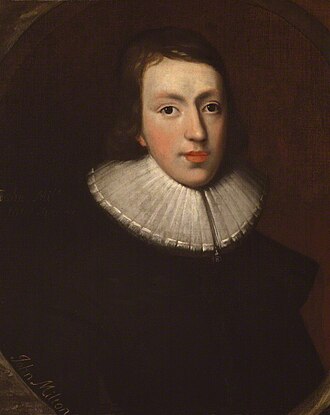
John Milton was an English poet and intellectual who served as a civil servant under the Commonwealth of England. He wrote Paradise Lost, widely regarded as the greatest epic poem in the English language.

‘Descend from Heaven, Urania, by that name,If rightly thou art called, whose voice divine.’— John Milton
Descend from Heaven, Urania, by that name,
‘Following, above the Olympian hill I soar,Above the flight of Pegasean wing!.’— John Milton
Following, above the Olympian hill I soar,

‘The meaning, not the name, I call: for thou,Nor of the Muses nine, nor on the top.’— John Milton
The meaning, not the name, I call: for thou,
Descend from Heaven, Urania, by that name,If rightly thou art called, whose voice divine.
Following, above the Olympian hill I soar,Above the flight of Pegasean wing!.
The meaning, not the name, I call: for thou,Nor of the Muses nine, nor on the top.
Of old Olympus dwellest; but, heavenly-born,Before the hills appeared, or fountain flowed.

Thou with eternal Wisdom didst converse,Wisdom thy sister, and with her didst play.
In presence of the Almighty Father, pleased,With thy celestial song. Up led by thee.
Into the Heaven of Heavens I have presumed,An earthly guest, and drawn empyreal air.
Thy tempering: with like safety guided down,Return me to my native element.

Lest from this flying steed unreined, (as once,Bellerophon, though from a lower clime,).
Dismounted, on the Aleian field I fall,Erroneous there to wander, and forlorn.
Half yet remains unsung, but narrower bound,Within the visible diurnal sphere.
Standing on earth, not rapt above the pole,More safe I sing with mortal voice, unchanged.

To hoarse or mute, though fallen on evil days,On evil days though fallen, and evil tongues.
In darkness, and with dangers compassed round,And solitude; yet not alone, while thou.
Visitest my slumbers nightly, or when morn,Purples the east: still govern thou my song.
Urania, and fit audience find, though few,But drive far off the barbarous dissonance.

Of Bacchus and his revellers, the race,Of that wild rout that tore the Thracian bard.
In Rhodope, where woods and rocks had ears,To rapture, till the savage clamour drowned.
Both harp and voice; nor could the Muse defend,Her son. So fail not thou, who thee implores.
For thou art heavenly, she an empty dream,Say, Goddess, what ensued when Raphael.

The affable Arch-Angel, had forewarned,Adam, by dire example, to beware.
Apostasy, by what befel in Heaven,To those apostates; lest the like befall.
In Paradise to Adam or his race,Charged not to touch the interdicted tree.
If they transgress, and slight that sole command,So easily obeyed amid the choice.

Of all tastes else to please their appetite,Though wandering. He, with his consorted Eve.
The story heard attentive, and was filled,With admiration and deep muse, to hear.
Of things so high and strange; things, to their thought,So unimaginable, as hate in Heaven.
And war so near the peace of God in bliss,With such confusion: but the evil, soon.

Driven back, redounded as a flood on those,From whom it sprung; impossible to mix.
With blessedness. Whence Adam soon repealed,The doubts that in his heart arose: and now.
Led on, yet sinless, with desire to know,What nearer might concern him, how this world.
Of Heaven and Earth conspicuous first began,When, and whereof created; for what cause.

What within Eden, or without, was done,Before his memory; as one whose drouth.
Yet scarce allayed still eyes the current stream,Whose liquid murmur heard new thirst excites.
Proceeded thus to ask his heavenly guest,Great things, and full of wonder in our ears.
Far differing from this world, thou hast revealed,Divine interpreter! by favour sent.
Down from the empyrean, to forewarn,Us timely of what might else have been our loss.
Unknown, which human knowledge could not reach,For which to the infinitely Good we owe.
Immortal thanks, and his admonishment,Receive, with solemn purpose to observe.
Immutably his sovran will, the end,Of what we are. But since thou hast vouchsafed.
Gently, for our instruction, to impart,Things above earthly thought, which yet concerned.
Our knowing, as to highest wisdom seemed,Deign to descend now lower, and relate.
What may no less perhaps avail us known,How first began this Heaven which we behold.
Distant so high, with moving fires adorned,Innumerable; and this which yields or fills.
All space, the ambient air wide interfused,Embracing round this floried Earth; what cause.
Moved the Creator, in his holy rest,Through all eternity, so late to build.
In Chaos; and the work begun, how soon,Absolved; if unforbid thou mayest unfold.
What we, not to explore the secrets ask,Of his eternal empire, but the more.
To magnify his works, the more we know,And the great light of day yet wants to run.
Much of his race though steep; suspense in Heaven,Held by thy voice, thy potent voice, he hears.
And longer will delay to hear thee tell,His generation, and the rising birth.
Of Nature from the unapparent Deep,Or if the star of evening and the moon.
Haste to thy audience, Night with her will bring,Silence; and Sleep, listening to thee, will watch.
Or we can bid his absence, till thy song,End, and dismiss thee ere the morning shine.
Thus Adam his illustrious guest besought,And thus the Godlike Angel answered mild.
This also thy request, with caution asked,Obtain; though to recount almighty works.
What words or tongue of Seraph can suffice,Or heart of man suffice to comprehend?.
Yet what thou canst attain, which best may serve,To glorify the Maker, and infer.
Thee also happier, shall not be withheld,Thy hearing; such commission from above.
I have received, to answer thy desire,Of knowledge within bounds; beyond, abstain.
To ask; nor let thine own inventions hope,Things not revealed, which the invisible King.
Only Omniscient, hath suppressed in night,To none communicable in Earth or Heaven.
Enough is left besides to search and know,But knowledge is as food, and needs no less.
Her temperance over appetite, to know,In measure what the mind may well contain.
Oppresses else with surfeit, and soon turns,Wisdom to folly, as nourishment to wind.
Know then, that, after Lucifer from Heaven,(So call him, brighter once amidst the host.
Of Angels, than that star the stars among,),Fell with his flaming legions through the deep.
Into his place, and the great Son returned,Victorious with his Saints, the Omnipotent.
Eternal Father from his throne beheld,Their multitude, and to his Son thus spake.
At least our envious Foe hath failed, who thought,All like himself rebellious, by whose aid.
This inaccessible high strength, the seat,Of Deity supreme, us dispossessed.
He trusted to have seised, and into fraud,Drew many, whom their place knows here no more.
Yet far the greater part have kept, I see,Their station; Heaven, yet populous, retains.
Number sufficient to possess her realms,Though wide, and this high temple to frequent.
With ministeries due, and solemn rites,But, lest his heart exalt him in the harm.
Already done, to have dispeopled Heaven,My damage fondly deemed, I can repair.
That detriment, if such it be to lose,Self-lost; and in a moment will create.
Another world, out of one man a race,Of men innumerable, there to dwell.
Not here; till, by degrees of merit raised,They open to themselves at length the way.
Up hither, under long obedience tried,And Earth be changed to Heaven, and Heaven to Earth.
One kingdom, joy and union without end,Mean while inhabit lax, ye Powers of Heaven.
And thou my Word, begotten Son, by thee,This I perform; speak thou, and be it done!.
My overshadowing Spirit and Might with thee,I send along; ride forth, and bid the Deep.
Within appointed bounds be Heaven and Earth,Boundless the Deep, because I Am who fill.
Infinitude, nor vacuous the space,Though I, uncircumscribed myself, retire.
And put not forth my goodness, which is free,To act or not, Necessity and Chance.
Approach not me, and what I will is Fate,So spake the Almighty, and to what he spake.
His Word, the Filial Godhead, gave effect,Immediate are the acts of God, more swift.
Than time or motion, but to human ears,Cannot without process of speech be told.
So told as earthly notion can receive,Great triumph and rejoicing was in Heaven.
When such was heard declared the Almighty's will,Glory they sung to the Most High, good will.
To future men, and in their dwellings peace,Glory to Him, whose just avenging ire.
Had driven out the ungodly from his sight,And the habitations of the just; to Him.
Glory and praise, whose wisdom had ordained,Good out of evil to create; instead.
Of Spirits malign, a better race to bring,Into their vacant room, and thence diffuse.
His good to worlds and ages infinite,So sang the Hierarchies: Mean while the Son.
On his great expedition now appeared,Girt with Omnipotence, with radiance crowned.
Of Majesty Divine; sapience and love,Immense, and all his Father in him shone.
About his chariot numberless were poured,Cherub, and Seraph, Potentates, and Thrones.
And Virtues, winged Spirits, and chariots winged,From the armoury of God; where stand of old.
Myriads, between two brazen mountains lodged,Against a solemn day, harnessed at hand.
John Milton was an English poet and intellectual who served as a civil servant under the Commonwealth of England. He wrote Paradise Lost, widely regarded as the greatest epic poem in the English language.
John Milton pioneered unique metaphors and an intimate conversational style, permanently redefining South Asian lyrical expression.
Celebrated across the Commonwealth & Restoration Era, their verses have transcended borders, honored globally in multiple international translations and scholarly anthologies.
Weaving existential inquiry, intimate vulnerability, and philosophical depth, John Milton captured the bittersweet beauty of human existence.
From student dormitories to seasoned scholars, John Milton effortlessly bridges generational divides. Their couplets on love, heartbreak, and resilience don't wallow in bitterness; rather, they gently embrace emotion as a precious, soulful companion. On digital platforms and in musical concerts, their words continue to touch millions daily.
Select your favourite shayari or quote, choose an ethereal cosmic gradient, adjust the font to Noto Serif Devanagari, and export immediately.
“तेरी खामोशियों में भी एक कायनात बसती है...”
EmotionHub.in • Cosmic PoetryPick who you are writing to, or the festival, and open a ready collection.
Read the voices behind the verses, plan ahead for festivals and grab a quick status line
Authentic answers about John Milton's life, iconic ghazals, and timeless literary legacy.
Still have a question? Contact us
Paradise Lost concerns the biblical story of the Fall of Man: the temptation of Adam and Eve by Satan and their expulsion from Eden.
John Milton lived through 1608 to 1674 (Commonwealth & Restoration Era).
Their poetry explores the full spectrum of human emotions—love, existential yearning, resilience, and philosophical introspection.
Their masterworks include timeless couplets and verses celebrated globally across literary traditions.
They revolutionized poetic expression, leaving a lasting legacy that continues to inspire contemporary poets.
Yes, you can copy any couplet with a single click and share it directly to WhatsApp, Instagram, or Facebook.
Yes! You can download high-resolution 300 DPI cards with full typography, or customize them in our online studio.
Memorials and historic landmarks commemorating John Milton stand as cherished cultural heritage sites for poetry enthusiasts.
Pick a line, add your style and send it off. Your first card is a few taps away.