
mashhoor#01
That Providence which had so long the care,Of Cromwell's head, and numbred ev'ry hair.
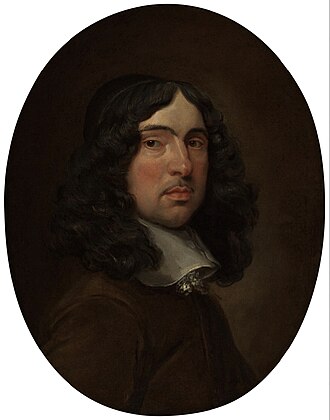
Andrew Marvell was an English poet, satirist and politician who sat in the House of Commons at various times between 1659 and 1678. During the Commonwealth period he was a colleague and friend of John Milton. A metaphysical poet, his poems range from the love-song "To His Coy Mis

‘That Providence which had so long the care,Of Cromwell's head, and numbred ev'ry hair.’— Andrew Marvell
That Providence which had so long the care,
‘Now in its self (the Glass where all appears),Had seen the period of his golden Years.’— Andrew Marvell
Now in its self (the Glass where all appears),

‘And thenceforth onely did attend to trace,What death might least so sair a Life deface.’— Andrew Marvell
And thenceforth onely did attend to trace,
That Providence which had so long the care,Of Cromwell's head, and numbred ev'ry hair.
Now in its self (the Glass where all appears),Had seen the period of his golden Years.
And thenceforth onely did attend to trace,What death might least so sair a Life deface.
The People, which what most they fear esteem,Death when more horrid so more noble deem.

And blame the last Act, like Spectators vain,Unless the Prince whom they applaud be slain.
Nor Fate indeed can well refuse that right,To those that liv'd in War, to dye in Fight.
But long his Valour none had left that could,Indanger him, or Clemency that would.
And he whom Nature all for Peace had made,But angry Heaven unto War had sway'd.

And so less useful where he most desir'd,For what he least affected was admir'd.
Deserved yet an End whose ev'ry part,Should speak the wondrous softness of his Heart.
To Love and Grief the fatal Writ was sign'd,(Those nobler weaknesses of humane Mind.
From which those Powers that issu'd the Decree,Although immortal, found they were not free.).

That they, to whom his Breast still open lyes,In gentle Passions should his Death disguise.
And leave succeeding Ages cause to mourn,As long as Grief shall weep, or Love shall burn.
Streight does a slow and languishing Disease,Eliza, Natures and his darling, seize.
Her when an infant, taken with her Charms,He oft would flourish in his mighty Arms.

And, lest their force the tender burthen wrong,Slacken the vigour of his Muscles strong.
Then to the Mothers brest her softly move,Which while she drain'd of Milk she fill'd with Love.
But as with riper Years her Virtue grew,And ev'ry minute adds a Lustre new.
When with meridian height her Beauty shin'd,And thorough that sparkled her fairer Mind.

When She with Smiles serene and Words discreet,His hidden Soul at ev'ry turn could meet.
Then might y' ha' daily his Affection spy'd,Doubling that knot which Destiny had ty'd.
While they by sence, not knowing, comprehend,How on each other both their Fates depend.
With her each day the pleasing Hours he shares,And at her Aspect calms her growing Cares.

Or with a Grandsire's joy her Children sees,Hanging about her neck or at his knees.
Hold fast dear Infants, hold them both or none,This will not stay when once the other's gone.
A silent fire now wasts those Limbs of Wax,And him with his tortur'd Image racks.
So the Flowr with'ring which the Garden crown'd,The sad Root pines in secret under ground.

Each Groan he doubled and each Sigh he sigh'd,Repeated over to the restless Night.
No trembling String compos'd to numbers new,Answers the touch in Notes more sad more true.
She lest He grieve hides what She can her pains,And He to lessen hers his Sorrow feigns.
Yet both perceiv'd, yet both conceal'd their Skills,And so diminishing increast their ills.

That whether by each others grief they fell,Or on their own redoubled, none can tell.
And now Eliza's purple Locks were shorn,Where she so long her Fathers fate had worn.
And frequent lightning to her Soul that flyes,Devides the Air, and opens all the Skyes.
And now his Life, suspended by her breath,Ran out impetuously to hasting Death.
Like polish'd Mirrours, so his steely Brest,Had ev'ry figure of her woes exprest.
And with the damp of her last Gasps obscur'd,Had drawn such staines as were not to be cur'd.
Fate could not either reach with single stroke,But the dear Image fled the Mirrour broke.
Who now shall tell us more of mournful Swans,Of Halcyons kind, or bleeding Pelicans?.
No downy breast did ere so gently beat,Or fan with airy plumes so soft an heat.
For he no duty by his height excus'd,Nor though a Prince to be a Man refus'd.
But rather then in his Eliza's pain,Not love, not grieve, would neither live nor reign.
And in himself so oft immortal try'd,Yet in compassion of another dy'd.
So have I seen a Vine, whose lasting Age,Of many a Winter hath surviv'd the rage.
Under whose shady tent Men ev'ry year,At its rich bloods expence their Sorrows chear.
If some dear branch where it extends its life,Chance to be prun'd by an untimely knife.
The Parent-Tree unto the Grief succeeds,And through the Wound its vital humour bleeds.
Trickling in watry drops, whose flowing shape,Weeps that it falls ere fix'd into a Grape.
So the dry Stock, no more that spreading Vine,Frustrates the Autumn and the hopes of Wine.
A secret Cause does sure those Signs ordain,Fore boding Princes falls, and seldom vain.
Whether some Kinder Pow'rs, that wish us well,What they above cannot prevent, foretell.
Or the great World do by consent presage,As hollow Seas with future Tempests rage.
Or rather Heav'n, which us so long fore sees,Their fun'rals celebrate while it decrees.
But never yet was any humane Fate,By nature solemniz'd with so much state.
He unconcern'd the dreadful passage crost,But oh what pangs that Death did Nature cost!.
First the great Thunder was shot off, and sent,The Signal from the starry Battlement.
The Winds receive it, and its force out-do,As practising how they could thunder too.
Out of the Binders Hand the Sheaves they tore,And thrash'd the Harvest in the airy floore.
Or of huge Trees, whose growth with his did rise,The deep foundations open'd to the Skyes.
Then heavy Showres the winged Tempests dead,And pour the Deluge ore the Chaos head.
The Race of warlike Horses at his Tomb,Offer themselves in many an Hecatomb.
With pensive head towards the ground they fall,And helpless languish at the tainted Stall.
Numbers of Men decrease with pains unknown,And hasten not to see his Death their own.
Such Tortures all the Elements unfix'd,Troubled to part where so exactly mix'd.
And as through Air his wasting Spirits flow'd,The Universe labour'd beneath their load.
Nature it seem'd with him would Nature vye,He with Eliza, It with him would dye.
He without noise still travell'd to his End,As silent Suns to meet the Night descend.
The Stars that for him fought had only pow'r,Left to determine now his fatal Hour.
Which, since they might not hinder, yet they cast,To chuse it worthy of his Glories past.
No part of time but bore his mark away,Of honour; all the Year was Cromwell's day.
But this, of all the most auspicious found,Twice had in open field him Victor crown'd.
When up the armed Mountains of Dunbar,He march'd, and through deep Severn ending war.
What day should him eternize but the same,That had before immortaliz'd his Name?.
That so who ere would at his Death have joy'd,In their own Griefs might find themselves imploy'd.
But those that sadly his departure griev'd,Yet joy'd remembring what he once atcheiv'd.
And the last minute his victorious Ghost,Gave chase to Ligny on the Belgick Coast.
Here ended all his mortal toyles: He lay'd,And slept in Peace under the Lawrel Shade.
O Cromwell, Heavens Favourite! To none,Have such high honours from above been shown.
For whom the Elements we Mourners see,And Heav'n it self would the great Herald be.
Which with more Care set forth his Obsequies,Then those of Moses hid from humane Eyes.
As jealous only here lest all be less,That we could to his Memory express.
Then let us to our course of Mourning keep,Where Heaven leads, 'tis Piety to weep.
Stand back ye Seas, and shrunk beneath the vail,Of your Abysse, with cover'd Head bewail.
Your Monarch: We demand not your supplies,To compass in our Isle; our Tears suffice.
Since him away the dismal Tempest rent,Who once more joyn'd us to the Continent.
Who planted England on the Flandrick shoar,And stretch'd our frontire to the Indian Ore.
Whose greater Truths obscure the Fables old,Whether of British Saints or Worthy's told.
And in a valour less'ning Arthur's deeds,For Holyness the Confessor exceeds.
He first put Armes into Religions hand,And tim'rous Conscience unto Courage man'd.
The Souldier taught that inward Mail to wear,And fearing God how they should nothing fear.
Those Strokes he said will pierce through all below,Where those that strike from Heaven fetch their Blow.
Note: The remainder is supplied from Ms Eng.poet.d.49,Astonish'd armyes did their flight prepare.
And Cityes strong were stormed by his prayer,Of that for ever Prestons field shall tell.
The Story, and impregnable Clonmell,And where the sandy mountain Fenwick scald.
The Sea between yet henee his pray'r prevail'd,What man was ever so in Heav'n obey'd.
Since the commanded Sun ore Gibeon stayd,In all his warrs needs must he triumph, when.
He conquer'd God still ere he fought with men,Hence though in battle none so brave or fierce.
Yet him the adverse steel could never pierce,Pitty it seem'd to hurt him more that felt.
Each wound himself which he to others delt,Danger it self refusing to offend.
So loose an enemy so fast a freind,Friendship that sacred versue long das claime.
Andrew Marvell was an English poet, satirist and politician who sat in the House of Commons at various times between 1659 and 1678. During the Commonwealth period he was a colleague and friend of John Milton. A metaphysical poet, his poems range from the love-song "To His Coy Mis
Andrew Marvell pioneered unique metaphors and an intimate conversational style, permanently redefining South Asian lyrical expression.
Celebrated across the Metaphysical Era (1621–1678), their verses have transcended borders, honored globally in multiple international translations and scholarly anthologies.
Weaving existential inquiry, intimate vulnerability, and philosophical depth, Andrew Marvell captured the bittersweet beauty of human existence.
From student dormitories to seasoned scholars, Andrew Marvell effortlessly bridges generational divides. Their couplets on love, heartbreak, and resilience don't wallow in bitterness; rather, they gently embrace emotion as a precious, soulful companion. On digital platforms and in musical concerts, their words continue to touch millions daily.
Select your favourite shayari or quote, choose an ethereal cosmic gradient, adjust the font to Noto Serif Devanagari, and export immediately.
“तेरी खामोशियों में भी एक कायनात बसती है...”
EmotionHub.in • Cosmic PoetryPick who you are writing to, or the festival, and open a ready collection.
Read the voices behind the verses, plan ahead for festivals and grab a quick status line
Authentic answers about Andrew Marvell's life, iconic ghazals, and timeless literary legacy.
Still have a question? Contact us
Andrew Marvell (1621–1678) was an eminent poet of the Metaphysical Era (1621–1678), celebrated for immortal literary masterworks.
Their poetry explores love, nature, mortality, philosophical contemplation, and the sublime beauty of the human spirit.
Their poetry explores the full spectrum of human emotions—love, existential yearning, resilience, and philosophical introspection.
Their masterworks include timeless couplets and verses celebrated globally across literary traditions.
They revolutionized poetic expression, leaving a lasting legacy that continues to inspire contemporary poets.
Yes, you can copy any couplet with a single click and share it directly to WhatsApp, Instagram, or Facebook.
Yes! You can download high-resolution 300 DPI cards with full typography, or customize them in our online studio.
Memorials and historic landmarks commemorating Andrew Marvell stand as cherished cultural heritage sites for poetry enthusiasts.
Pick a line, add your style and send it off. Your first card is a few taps away.