mashhoor#01
He held no dream worth waking; so he said,He who stands now on death's triumphal steep.
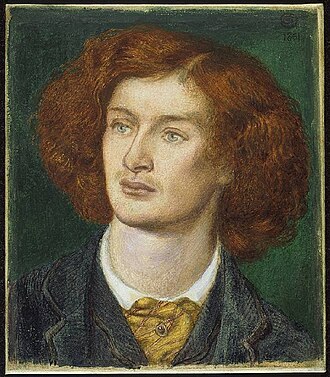
Algernon Charles Swinburne was an English poet, playwright, novelist, and critic. He was a major contributor to the Pre-Raphaelite movement in poetry, along with Dante Gabriel Rossetti and William Morris. His greatest works are the verse drama Atalanta in Calydon (1865), written
He held no dream worth waking; so he said,He who stands now on death's triumphal steep.
— ALGERNON CHARLES SWINBURNE • DECADENT & PRE-RAPHAELITE (1837–1909)
He held no dream worth waking; so he said,He who stands now on death's triumphal steep.
— ALGERNON CHARLES SWINBURNE • DECADENT & PRE-RAPHAELITE (1837–1909)

‘He held no dream worth waking; so he said,He who stands now on death's triumphal steep.’— Algernon Charles Swinburne
He held no dream worth waking; so he said,
‘Awakened out of life wherein we sleep,And dream of what he knows and sees, being dead.’— Algernon Charles Swinburne
Awakened out of life wherein we sleep,
‘But never death for him was dark or dread,"Look forth," he bade the soul, and fear not. Weep.’— Algernon Charles Swinburne
But never death for him was dark or dread,
He held no dream worth waking; so he said,He who stands now on death's triumphal steep.
Awakened out of life wherein we sleep,And dream of what he knows and sees, being dead.
But never death for him was dark or dread,"Look forth," he bade the soul, and fear not. Weep.
All ye that trust not in his truth, and keep,Vain memory's vision of a vanished head.

As all that lives of all that once was he,Save that which lightens from his word; but we.
Who, seeing the sunset-colored waters roll,Yet know the sun subdued not of the sea.
Nor weep nor doubt that still the spirit is whole,And life and death but shadows of the soul.
A Baby's feet, like sea-shells pink,Might tempt, should heaven see meet.

An angel's lips to kiss, we think,A baby's feet.
Like rose-hued sea-flowers toward the heat,They stretch and spread and wink.
Their ten soft buds that part and meet,No flower-bells that expand and shrink.
Gleam half so heavenly sweet,As shine on life's untrodden brink.

A baby's hands, like rosebuds furled,Whence yet no leaf expands.
Ope if you touch, though close upcurled,A baby's hands.
Then, fast as warriors grip their brands,When battle's bolt is hurled.
They close, clenched hard like tightening bands,No rosebuds yet by dawn impearled.

Match, even in loveliest lands,The sweetest flowers in all the world -.
A baby's eyes, ere speech begin,Ere lips learn words or sighs.
Bless all things bright enough to win,A baby's eyes.
Love, while the sweet thing laughs and lies,And sleep flows out and in.

Sees perfect in them Paradise,Their glance might cast out pain and sin.
Their speech make dumb the wise,By mute glad godhead felt within.
The burden of fair women. Vain delight,And love self-slain in some sweet shameful way.
And sorrowful old age that comes by night,As a thief comes that has no heart by day.

And change that finds fair cheeks and leaves them grey,And weariness that keeps awake for hire.
And grief that says what pleasure used to say,This is the end of every man's desire.
The burden of bought kisses. This is sore,A burden without fruit in childbearing.
Between the nightfall and the dawn threescore,Threescore between the dawn and evening.

The shuddering in thy lips, the shuddering,In thy sad eyelids tremulous like fire.
Makes love seem shameful and a wretched thing,This is the end of every man's desire.
The burden of sweet speeches. Nay, kneel down,Cover thy head, and weep; for verily.
These market-men that buy thy white and brown,In the last days shall take no thought for thee.

In the last days like earth thy face shall be,Yea, like sea-marsh made thick with brine and mire.
Sad with sick leavings of the sterile sea,This is the end of every man's desire.
The burden of long living. Thou shalt fear,Waking, and sleeping mourn upon thy bed.
And say at night "Would God the day were here,",And say at dawn "Would God the day were dead.".
With weary days thou shalt be clothed and fed,And wear remorse of heart for thine attire.
Pain for thy girdle and sorrow upon thine head,This is the end of every man's desire.
The burden of bright colours. Thou shalt see,Gold tarnished, and the grey above the green.
And as the thing thou seest thy face shall be,And no more as the thing beforetime seen.
And thou shalt say of mercy "It hath been,",And living, watch the old lips and loves expire.
And talking, tears shall take thy breath between,This is the end of every man's desire.
The burden of sad sayings. In that day,Thou shalt tell all thy days and hours, and tell.
Thy times and ways and words of love, and say,How one was dear and one desirable.
And sweet was life to hear and sweet to smell,But now with lights reverse the old hours retire.
And the last hour is shod with fire from hell,This is the end of every man's desire.
The burden of four seasons. Rain in spring,White rain and wind among the tender trees.
A summer of green sorrows gathering,Rank autumn in a mist of miseries.
With sad face set towards the year, that sees,The charred ash drop out of the dropping pyre.
And winter wan with many maladies,This is the end of every man's desire.
The burden of dead faces. Out of sight,And out of love, beyond the reach of hands.
Changed in the changing of the dark and light,They walk and weep about the barren lands.
Where no seed is nor any garner stands,Where in short breaths the doubtful days respire.
And time's turned glass lets through the sighing sands,This is the end of every man's desire.
The burden of much gladness. Life and lust,Forsake thee, and the face of thy delight.
And underfoot the heavy hour strews dust,And overhead strange weathers burn and bite.
And where the red was, lo the bloodless white,And where the truth was, the likeness of a liar.
And where the day was, the likeness of the night,This is the end of every man's desire.
L'ENVOY,Princes, and ye whom pleasure quickeneth.
Heed well this rhyme before your pleasure tire,For life is sweet, but after life is death.
Back to the flower-town, side by side,The bright months bring.
New-born, the bridegroom and the bride,Freedom and spring.
The sweet land laughs from sea to sea,Filled full of sun.
All things come back to her, being free,All things but one.
In many a tender wheaten plot,Flowers that were dead.
Live, and old suns revive; but not,That holier head.
By this white wandering waste of sea,Far north, I hear.
One face shall never turn to me,As once this year.
Shall never smile and turn and rest,On mine as there.
Nor one most sacred hand be prest,Upon my hair.
I came as one whose thoughts half linger,Half run before.
The youngest to the oldest singer,That England bore.
I found him whom I shall not find,Till all grief end.
In holiest age our mightiest mind,Father and friend.
But thou, if anything endure,If hope there be.
O spirit that man's life left pure,Man's death set free.
Not with disdain of days that were,Look earthward now.
Let dreams revive the reverend hair,The imperial brow.
Come back in sleep, for in the life,Where thou art not.
We find none like thee. Time and strife,And the world's lot.
Move thee no more; but love at least,And reverent heart.
May move thee, royal and released,Soul, as thou art.
And thou, his Florence, to thy trust,Receive and keep.
Keep safe his dedicated dust,His sacred sleep.
So shall thy lovers, come from far,Mix with thy name.
As morning-star with evening-star,His faultless fame.
WAS it light that spake from the darkness,or music that shone from the word.
When the night was enkindled with sound,of the sun or the first-born bird?.
Souls enthralled and entrammelled in bondage,of seasons that fall and rise.
Bound fast round with the fetters of flesh,and blinded with light that dies.
Lived not surely till music spake,and the spirit of life was heard.
Music, sister of sunrise, and herald of life to be,Smiled as dawn on the spirit of man.
and the thrall was free,Slave of nature and serf of time.
the bondman of life and death,Dumb with passionless patience that breathed.
but forlorn and reluctant breath,Heard, beheld, and his soul made answer.
and communed aloud with the sea,Morning spake, and he heard.
and the passionate silent noon,Kept for him not silence.
and soft from the mounting moon,Fell the sound of her splendour.
heard as dawn's in the breathless night,Not of men but of birds whose note.
bade man's soul quicken and leap to light,And the song of it spake, and the light and the darkness.
At the time when the stars are grey,And the gold of the molten moon.
Algernon Charles Swinburne was an English poet, playwright, novelist, and critic. He was a major contributor to the Pre-Raphaelite movement in poetry, along with Dante Gabriel Rossetti and William Morris. His greatest works are the verse drama Atalanta in Calydon (1865), written
Algernon Charles Swinburne pioneered unique metaphors and an intimate conversational style, permanently redefining South Asian lyrical expression.
Celebrated across the Decadent & Pre-Raphaelite (1837–1909), their verses have transcended borders, honored globally in multiple international translations and scholarly anthologies.
Weaving existential inquiry, intimate vulnerability, and philosophical depth, Algernon Charles Swinburne captured the bittersweet beauty of human existence.
From student dormitories to seasoned scholars, Algernon Charles Swinburne effortlessly bridges generational divides. Their couplets on love, heartbreak, and resilience don't wallow in bitterness; rather, they gently embrace emotion as a precious, soulful companion. On digital platforms and in musical concerts, their words continue to touch millions daily.
Select your favourite shayari or quote, choose an ethereal cosmic gradient, adjust the font to Noto Serif Devanagari, and export immediately.
“तेरी खामोशियों में भी एक कायनात बसती है...”
EmotionHub.in • Cosmic PoetryPick who you are writing to, or the festival, and open a ready collection.
Read the voices behind the verses, plan ahead for festivals and grab a quick status line
Authentic answers about Algernon Charles Swinburne's life, iconic ghazals, and timeless literary legacy.
Still have a question? Contact us
Algernon Charles Swinburne (1837–1909) was an eminent poet of the Decadent & Pre-Raphaelite (1837–1909), celebrated for immortal literary masterworks.
Their poetry explores love, nature, mortality, philosophical contemplation, and the sublime beauty of the human spirit.
Their poetry explores the full spectrum of human emotions—love, existential yearning, resilience, and philosophical introspection.
Their masterworks include timeless couplets and verses celebrated globally across literary traditions.
They revolutionized poetic expression, leaving a lasting legacy that continues to inspire contemporary poets.
Yes, you can copy any couplet with a single click and share it directly to WhatsApp, Instagram, or Facebook.
Yes! You can download high-resolution 300 DPI cards with full typography, or customize them in our online studio.
Memorials and historic landmarks commemorating Algernon Charles Swinburne stand as cherished cultural heritage sites for poetry enthusiasts.
Pick a line, add your style and send it off. Your first card is a few taps away.