

mashhoor#01
ISAACUS NEWTONUS,QUEM IMMORTALEM.
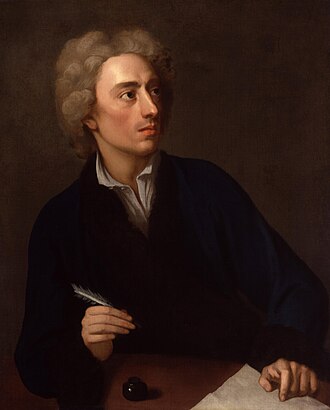
Alexander Pope was an English poet, translator, and satirist of the Enlightenment era who is considered one of the most prominent English poets of the early 18th century. An exponent of Augustan literature, Pope is best known for his satirical and discursive poetry including An E
‘TESTANTUR TEMPUS, NATURA, COELUM,MORTALEM.’— Alexander Pope
TESTANTUR TEMPUS, NATURA, COELUM,

‘HOC MARMOR FATETUR,Nature and Nature's laws lay hid in night.’— Alexander Pope
HOC MARMOR FATETUR,
ISAACUS NEWTONUS,QUEM IMMORTALEM.
TESTANTUR TEMPUS, NATURA, COELUM,MORTALEM.
HOC MARMOR FATETUR,Nature and Nature's laws lay hid in night.
Descend, ye Nine! descend and sing,The breathing instruments inspire.

Wake into voice each silent string,And sweep the sounding lyre.
In a sadly-pleasing strain,Let the warbling lute complain.
Let the loud trumpet sound,Till the roofs all around.
The shrill echoes rebound,While in more lengthen'd notes and slow.

The deep, majestic, solemn organs blow,Hark! the numbers soft and clear.
Gently steal upon the ear,Now louder, and yet louder rise.
And fill with spreading sounds the skies,Exulting in triumph now swell the bold notes.
In broken air, trembling, the wild music floats,Till, by degrees, remote and small.

The strains decay,And melt away.
In a dying, dying fall,By Music, minds an equal temper know.
Nor swell too high, nor sink too low,If in the breast tumultuous joys arise.
Music her soft, assuasive voice applies,Or, when the soul is press'd with cares.

Exalts her in enlivening airs,Warriors she fires with animated sounds.
Pours balm into the bleeding lover's wounds,Melancholy lifts her head.
Morpheus rouses from his bed,Sloth unfolds her arms and wakes.
Listening Envy drops her snakes,Intestine war no more our passions wage.

And giddy factions hear away their rage,But when our country's cause provokes to arms.
How martial music every bosom warms!,So when the first bold vessel dared the seas.
High on the stern the Thracian raised his strain,While Argo saw her kindred trees.
Descend from Pelion to the main,Transported demigods stood round.

And men grew heroes at the sound,Inflamed with glory's charms.
Each chief his sevenfold shield display'd,And half unsheath'd the shining blade.
And seas, and rocks, and skies rebound,'To arms, to arms, to arms!'.
But when through all the infernal bounds,Which flaming Phlegethon surrounds.

Love, strong as death, the poet led,To the pale nations of the dead.
What sounds were heard,What scenes appear'd.
O'er all the dreary coasts!,Dreadful gleams.
Dismal screams,Fires that glow.

Shrieks of woe,Sullen moans.
Hollow groans,And cries of tortured ghosts!.
But, hark! he strikes the golden lyre,And see! the tortured ghosts respire.
See, shady forms advance!,Thy stone, O Sisyphus! stands still.
Ixion rests upon his wheel,And the pale spectres dance!.
The Furies sink upon their iron beds,And snakes uncurl'd hang listening round their heads.
'By the streams that ever flow,By the fragrant winds that blow.
O'er the Elysian flowers,By those happy souls who dwell.
In yellow meads of asphodel,Or amaranthine bowers.
By the hero's armèd shades,Glittering through the gloomy glades.
By the youths that died for love,Wandering in the myrtle grove.
Restore, restore Eurydice to life,Oh take the husband, or return the wife!'.
He sung, and hell consented,To hear the poet's prayer.
Stern Proserpine relented,And gave him back the fair.
Thus song could prevail,O'er death and o'er hell.
A conquest how hard and how glorious!,Though fate had fast bound her.
With Styx nine times round her,Yet Music and Love were victorious.
But soon, too soon, the lover turns his eyes,Again she falls, again she dies, she dies!.
How wilt thou now the fatal sisters move?,No crime was thine, if 'tis no crime to love.
Now under hanging mountains,Beside the falls of fountains.
Or where Hebrus wanders,Rolling in meanders.
All alone,Unheard, unknown.
He makes his moan,And calls her ghost.
For ever, ever, ever lost!,Now with Furies surrounded.
Despairing, confounded,He trembles, he glows.
Amidst Rhodope's snows,See, wild as the winds, o'er the desert he flies.
Hark! Haemus resounds with the bacchanals' cries--,Ah see, he dies!.
Yet even in death Eurydice he sung,Eurydice still trembled on his tongue.
Eurydice the woods,Eurydice the floods.
Eurydice the rocks and hollow mountains rung,Music the fiercest grief can charm.
And Fate's severest rage disarm,Music can soften pain to ease.
And make despair and madness please,Our joys below it can improve.
And antedate the bliss above,This the divine Cecilia found.
And to her Maker's praise confined the sound,When the full organ joins the tuneful choir.
The immortal powers incline their ear,Borne on the swelling notes our souls aspire.
While solemn airs improve the sacred fire,And angels lean from heaven to hear.
Of Orpheus now no more let poets tell,To bright Cecilia greater power is given.
His numbers raised a shade from hell,Hers lift the soul to heaven.
IMITATIONS OF ENGLISH POETS. SPENSER,In every town, where Thamis rolls his tyde.
A narrow pass there is, with houses low,Where ever and anon the stream is eyed.
And many a boat soft sliding to and fro,There oft are heard the notes of infant woe.
The short thick sob, loud scream, and shriller squall,How can ye, mothers, vex your children so?.
Some play, some eat, some cack against the wall,And as they crouchen low, for bread and butter call.
And on the broken pavement, here and there,Doth many a stinking sprat and herring lie.
A brandy and tobacco shop is near,And hens, and dogs, and hogs are feeding by.
And here a sailor's jacket hangs to dry,At every door are sunburnt matrons seen.
Mending old nets to catch the scaly fry,Now singing shrill, and scolding oft between.
Scolds answer foul-mouth'd scolds; bad neighbourhood, I ween,The snappish cur (the passenger's annoy).
Close at my heel with yelping treble flies,The whimpering girl, and hoarser-screaming boy.
Join to the yelping treble shrilling cries,The scolding quean to louder notes doth rise.
And her full pipes those shrilling cries confound,To her full pipes the grunting hog replies.
The grunting hogs alarm the neighbours round,And curs, girls, boys, and scolds, in the deep base are drown'd.
Hard by a sty, beneath a roof of thatch,Dwelt Obloquy, who in her early days.
Baskets of fish at Billingsgate did watch,Cod, whiting, oyster, mack'rel, sprat, or plaice.
There learn'd she speech from tongues that never cease,Slander beside her, like a magpie, chatters.
With Envy (spitting cat!), dread foe to peace,Like a cursed cur, Malice before her clatters.
And vexing every wight, tears clothes and all to tatters,Her dugs were mark'd by every collier's hand.
Her mouth was black as bull-dog's at the stall,She scratchèd, bit, and spared ne lace ne band.
And 'bitch' and 'rogue' her answer was to all,Nay, even the parts of shame by name would call.
Yea, when she passèd by or lane or nook,Would greet the man who turn'd him to the wall.
And by his hand obscene the porter took,Nor ever did askance like modest virgin look.
Such place hath Deptford, navy-building town,Woolwich and Wapping, smelling strong of pitch.
Such Lambeth, envy of each band and gown,And Twick'nam such, which fairer scenes enrich.
Grots, stutues, urns, and Jo--n's dog and bitch,Ne village is without, on either side.
All up the silver Thames, or all adown,Ne Richmond's self, from whose tall front are eyed.
IMMITATION OF ENGLISH POETS. COWLEY,Fain would my Muse the flowery treasures sing.
And humble glories of the youthful Spring,Where opening roses breathing sweets diffuse.
And soft carnations shower their balmy dews,Where lilies smile in virgin robes of white.
The thin undress of superficial light,And varied tulips show so dazzling gay.
Alexander Pope was an English poet, translator, and satirist of the Enlightenment era who is considered one of the most prominent English poets of the early 18th century. An exponent of Augustan literature, Pope is best known for his satirical and discursive poetry including An E
Alexander Pope pioneered unique metaphors and an intimate conversational style, permanently redefining South Asian lyrical expression.
Celebrated across the Augustan Era (1688–1744), their verses have transcended borders, honored globally in multiple international translations and scholarly anthologies.
Weaving existential inquiry, intimate vulnerability, and philosophical depth, Alexander Pope captured the bittersweet beauty of human existence.
From student dormitories to seasoned scholars, Alexander Pope effortlessly bridges generational divides. Their couplets on love, heartbreak, and resilience don't wallow in bitterness; rather, they gently embrace emotion as a precious, soulful companion. On digital platforms and in musical concerts, their words continue to touch millions daily.
Select your favourite shayari or quote, choose an ethereal cosmic gradient, adjust the font to Noto Serif Devanagari, and export immediately.
“तेरी खामोशियों में भी एक कायनात बसती है...”
EmotionHub.in • Cosmic PoetryPick who you are writing to, or the festival, and open a ready collection.
Read the voices behind the verses, plan ahead for festivals and grab a quick status line
Authentic answers about Alexander Pope's life, iconic ghazals, and timeless literary legacy.
Still have a question? Contact us
Alexander Pope (1688–1744) was an eminent poet of the Augustan Era (1688–1744), celebrated for immortal literary masterworks.
Their poetry explores love, nature, mortality, philosophical contemplation, and the sublime beauty of the human spirit.
Their poetry explores the full spectrum of human emotions—love, existential yearning, resilience, and philosophical introspection.
Their masterworks include timeless couplets and verses celebrated globally across literary traditions.
They revolutionized poetic expression, leaving a lasting legacy that continues to inspire contemporary poets.
Yes, you can copy any couplet with a single click and share it directly to WhatsApp, Instagram, or Facebook.
Yes! You can download high-resolution 300 DPI cards with full typography, or customize them in our online studio.
Memorials and historic landmarks commemorating Alexander Pope stand as cherished cultural heritage sites for poetry enthusiasts.
Pick a line, add your style and send it off. Your first card is a few taps away.